
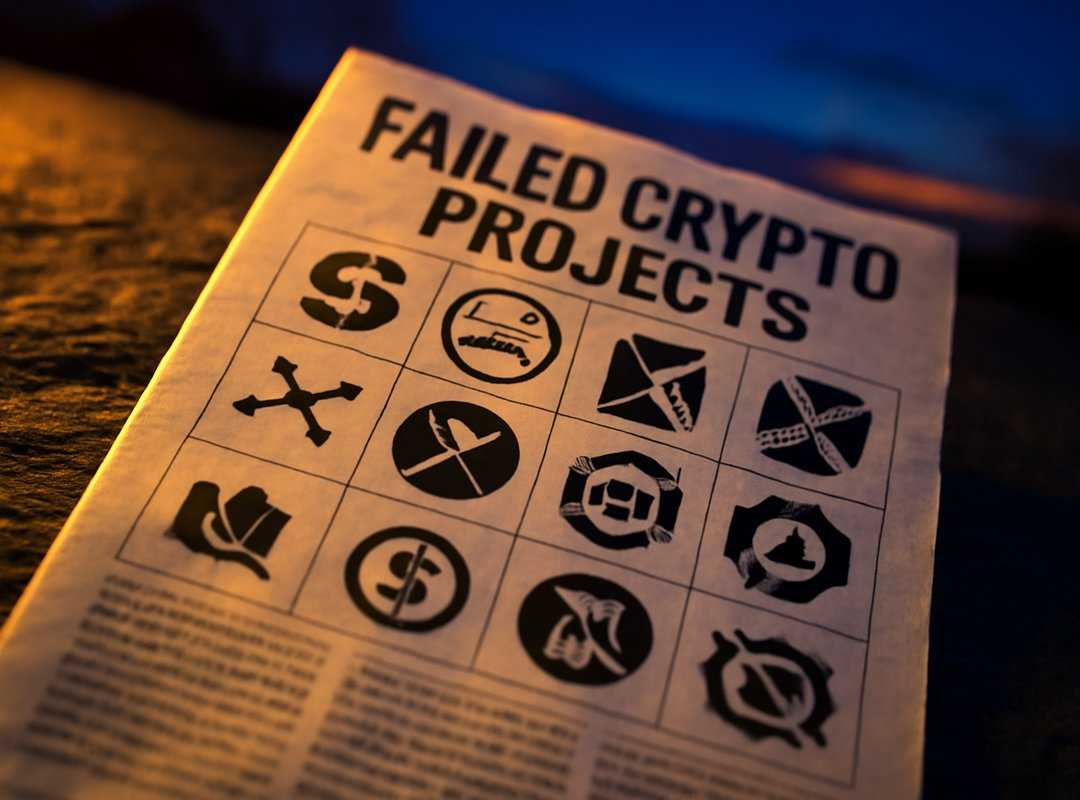
The crypto graveyard is full of projects that promised the moon but delivered nothing but dust. You know it. I know it.
We’ve watched countless coins rise and fall. This isn’t just another list of failures. It’s a practical guide to understanding why they failed.
You want to protect your investments, right? Then you need to get into the guts of these disasters. We’ve spent years analyzing blockchain mechanics and market trends.
We’ve seen the hype, the fall, and the lessons hidden in the rubble. By the end of this, you’ll have a system for a failed crypto projects analysis and a checklist of red flags. Are you ready to spot the next dud before it drains your wallet?
Trust me, you’ll walk away better prepared.
Why Most Crypto Projects Are Doomed from the Start
I’ve been around the crypto block. Seen projects rise and fall. And let me tell you, most of them are doomed from day one.
Why? Let’s break it down.
1. Flawed Tokenomics
Ever played a game where the rules make no sense? That’s what flawed tokenomics feels like. Many projects create hyperinflationary supply or reward early insiders, leaving new investors with nothing but scraps.
It’s like playing Monopoly where one player starts with all the properties. Not fun and definitely not fair.
2. No Real-World Use Case
Here’s a harsh truth: lots of crypto projects are solutions in search of a problem. You know, like that gadget collecting dust on your shelf. If a project doesn’t solve a real issue, it’s worthless.
You need to ask, does this have a genuine market fit or is it just hype? Be blunt about these things.
3. Weak or Shady Team
A project’s only as good as the people behind it. If the team is anonymous, has no relevant experience, or a history of failed ventures, that’s a giant red flag. Trust me, I’ve seen teams implode because they couldn’t deliver.
You need to know who’s steering the ship.
4. Broken Tech & Security Holes
Great ideas are useless without solid code. A single catastrophic hack can kill a project. I’ve witnessed projects crumble overnight due to security breaches.
Want to dive deeper into these takeaways? Read more on how these factors play out in the world of crypto.
In the end, this failed crypto projects analysis shows why many projects crash and burn. Keep your eyes open and your skepticism high.
Anatomy of a Catastrophe: The Terra (LUNA) Collapse
Let’s talk about Terra/LUNA. It’s the classic tale of what happens when ambition goes unchecked. You remember the myth of Icarus, right?
He flew too close to the sun. Terra? Same story, different context.
Here’s a project that aimed for the moon but crashed hard.
So, what was Terra’s big idea? An algorithmic stablecoin. Sounds fancy, but think of it as a digital balancing act.
The goal was to keep its value stable without the usual backing of cash or assets. Spoiler alert: it was a ticking time bomb. The plan was simple on paper, but reality had other ideas.
The heart of the disaster? The ‘death spiral.’ Imagine a bank run, but digital. Fear triggered a scramble, and the algorithm (not designed for panic) went haywire.
It started printing LUNA tokens like there was no tomorrow (trillions,) in fact. Overnight, what was once valuable turned worthless.
Some might say the warning signs were there all along. Critics were already shouting about its fragility. The math didn’t add up.
Offering a 20% APY through Anchor Protocol? Too good to be true. The whole project was a castle built on hype.
And we all know what happens to castles made of sand.
Here’s a pro tip: If something seems too shiny and perfect, it probably is. Even the biggest projects can hide fatal flaws right under our noses. Terra wasn’t alone in this.
It’s just one in the 10 biggest failures in crypto that proved even giants can crumble.
In this failed crypto projects analysis, one thing is clear. Sometimes, ambition needs a reality check. Lessons learned?
Always question the hype. Remember, not everything that glitters is gold. Some projects just aren’t built to last.
Stay sharp out there.
Death by a Thousand Cuts: Ghost Chains Fizzle Out
It’s not just the spectacular implosions like LUNA that spell doom. A far more insidious threat exists: the slow demise of so-called “Ethereum Killers.” You know the type. Once hailed as game-changers but now, well, ghost chains.

Does anyone even remember EOS? It was once touted as the next big thing. Now, it’s a shadow of its former self.
The symptoms are clear. Developer activity? Plummets.
Discord and Twitter? Silent. Partnerships?
Non-existent. Transaction volume? Dries up.
Why? They lose the narrative war. Developers jump ship to more promising ecosystems, and the initial hype fizzles out because there’s no real adoption.
Investors end up stuck with a ghost of a chain, watching their capital bleed out slowly. (It’s like watching paint dry, but worse (it’s) your money.)
Why does this happen? Simply put, they fail to evolve. When a project can’t sustain its momentum, when its promises fall flat, people move on.
There’s always a shiny new project on the horizon. But these slow fade-outs are deceptive, aren’t they? You don’t wake up one morning to a portfolio worth zero, but rather you watch it evaporate over months.
That’s almost crueler.
For investors, the risk isn’t always a catastrophic loss overnight. Instead, it’s being trapped in a dead end, unable to exit without incurring massive losses. This kind of slow decline can be more damaging than a sudden crash.
It keeps you tethered to hope (and denial), wasting precious time and resources. Want to avoid this fate? Understand the understanding market sentiment expert lenses.
Pay attention to where the crowd moves and why. Failed crypto projects analysis isn’t just theory. It’s survival.
Spot the Next Crypto Failure: Your Red Flag Checklist
I learned the hard way that failed crypto projects are everywhere. You need a solid checklist to avoid falling into the same traps I did. First off, always check the whitepaper.
If it’s vague and full of buzzwords like “decentralized” or “paradigm-shifting,” then run. Does it even explain how the tech works?
Look at the team behind the project. Are they anonymous or inexperienced? You wouldn’t hand over your wallet to a stranger on the street, right?
So why do it in crypto?
Next, consider the token’s utility. If all you can do is stake for more coins, it’s a circular system bound to collapse.
Now, the community. Watch out for hype without substance. Genuine discussions about the tech are more valuable than endless “wen moon” chants.
Unrealistic promises are another major red flag. Guaranteed high returns with no risk? That’s not an investment (it’s) a trap.
These pointers helped me sharpen my failed crypto projects analysis. They can help you get through this tricky space too. Remember, if something doesn’t add up, trust your gut.
Sometimes, skepticism is your best friend in this volatile world.
Turn Losses into Lessons
Crypto is a wild ride. It’s easy to get caught up and lose money on doomed projects. But there’s a way to stop gambling and start winning.
By studying failed crypto projects analysis, you can dodge the traps that catch so many. Use the red flag checklist to assess each asset you consider. Seriously, this approach can change your portfolio’s outcome.
Don’t just throw money around and hope for the best. Analyze, learn, and protect your investments. The best defense is a strong offense.
Ready to turn your losses into gains? Start evaluating your portfolio today.
 Stephen M. has opinions about digital asset investment strategies. Informed ones, backed by real experience — but opinions nonetheless, and they doesn't try to disguise them as neutral observation. They thinks a lot of what gets written about Digital Asset Investment Strategies, Blockchain Mechanics and Protocols, Expert Insights is either too cautious to be useful or too confident to be credible, and they's work tends to sit deliberately in the space between those two failure modes.
Reading Stephen's pieces, you get the sense of someone who has thought about this stuff seriously and arrived at actual conclusions — not just collected a range of perspectives and declined to pick one. That can be uncomfortable when they lands on something you disagree with. It's also why the writing is worth engaging with. Stephen isn't interested in telling people what they want to hear. They is interested in telling them what they actually thinks, with enough reasoning behind it that you can push back if you want to. That kind of intellectual honesty is rarer than it should be.
What Stephen is best at is the moment when a familiar topic reveals something unexpected — when the conventional wisdom turns out to be slightly off, or when a small shift in framing changes everything. They finds those moments consistently, which is why they's work tends to generate real discussion rather than just passive agreement.