
Crypto moves fast—and if you’re trying to keep up with trend shifts, new blockchain protocols, and evolving token utility models, it can feel overwhelming. You’re likely here because you want clear, actionable insights into crypto trendwatch, smarter digital asset investment strategies, and a practical crypto wallet setup guide you can actually follow.
This article breaks down what’s happening in the market right now, explains the mechanics behind key blockchain developments, and shows how different token models are designed to create utility and long-term value. Whether you’re refining your portfolio strategy or setting up your first secure wallet, you’ll find step-by-step clarity without the technical fluff.
Our analysis is grounded in ongoing market monitoring, protocol-level research, and hands-on testing of wallet configurations and token ecosystems—so you’re not just getting theory, but insights built on real-world application and data-backed observation.
Your Digital Fortress: The First Step to Crypto Sovereignty
In crypto, you are your own bank. That sounds empowering—until you realize there’s no customer support line (this isn’t your Netflix password reset). The real danger isn’t market crashes; it’s weak security habits.
Think of your wallet like Batman’s utility belt: powerful, but only if you know what each tool does.
Hot wallets stay online for convenience. Cold wallets remain offline for stronger protection.
Follow this crypto wallet setup guide framework:
- Choose a reputable wallet provider.
- Secure your seed phrase offline.
- Enable two-factor authentication.
- Test small transactions first.
Pro tip: write backups on paper, not screenshots.
The Two Flavors of Crypto Wallets: Hot vs. Cold
Crypto wallets sound complicated, but the idea is simple: they store your private keys (the secret codes that prove you own your crypto). The big difference? Whether those keys touch the internet.
Hot wallets (also called software wallets) are apps or browser extensions like MetaMask or Phantom. Because they’re connected to the internet, they make it easy to trade, swap tokens, or interact with decentralized applications (dApps). Think of them like a checking account—great for daily use.
Pros of Hot Wallets:
- Fast access for trading and NFTs
- Seamless dApp connections
- Free and beginner-friendly
Cons:
- Vulnerable to phishing, malware, and hacks (Chainalysis reports billions lost annually to crypto crime)
Cold wallets (hardware wallets like Ledger or Trezor) store keys completely offline on a physical device. That offline storage means hackers can’t reach them through the internet.
Pros of Cold Wallets:
- Industry-leading security
- Ideal for long-term holdings
Cons:
- Upfront cost
- Less convenient for quick trades
Some argue hot wallets are “secure enough.” For small amounts, maybe. But serious investors prefer a hybrid strategy: use a hot wallet for spending and a cold wallet for savings (like cash in your pocket vs. a vault). For setup help, follow a crypto wallet setup guide to avoid common mistakes.
A Practical Walkthrough: Setting Up a Secure Software Wallet
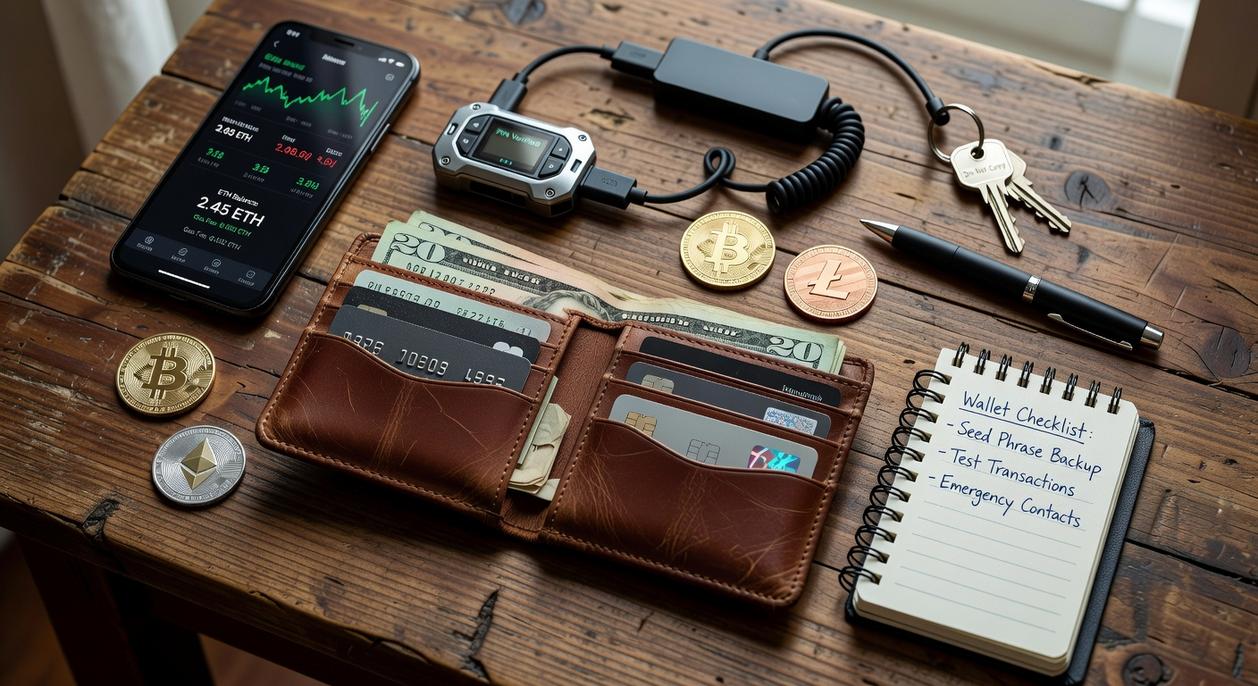
Setting up a software wallet isn’t complicated—but it is high stakes. Think of this as your personal crypto wallet setup guide for doing it right the first time.
Step 1: Choose a Reputable Wallet
Download ONLY from the wallet’s official website or a verified app store. Double-check the URL letter by letter. Phishing sites often mimic real ones with tiny spelling changes (the digital equivalent of a fake mustache). If you’re unsure about storage types, review hot wallet vs cold wallet which is safer: https://etrscrypto.net/hot-wallet-vs-cold-wallet-which-is-safer/
Some argue app stores are always safe. Not quite—malicious apps occasionally slip through (see FTC consumer alerts). Verification is your first defense.
Step 2: Create a Strong, Unique Password
This password protects access on your device. It is not the master key to your funds. Use at least 12–16 characters with a mix of symbols and cases. Never reuse passwords (data breaches are common, per IBM’s Cost of a Data Breach Report).
Step 3: The Secret Recovery Phrase (Seed Phrase)
Your 12 or 24-word seed phrase is the master key. It can restore your wallet anywhere in the world. Whoever controls it controls your crypto. No exceptions.
Step 4: Secure Your Seed Phrase — The Golden Rule
DO:
- Write it on paper or metal
- Store copies in multiple secure, offline locations (like a safe)
DON’T:
- Screenshot it
- Save it in a text file
- Store it in a password manager
- Email or photograph it
- Enter it into any website
Some think digital backups are “more convenient.” That convenience is exactly what hackers exploit.
Step 5: Confirm and Verify
Complete the wallet’s verification step to confirm accuracy, then lock it away securely.
Speculation: As AI-driven phishing grows, seed phrase theft may become even more sophisticated. Offline security could soon shift from “best practice” to absolute necessity.
Advanced Protocols for Long-Term Asset Protection
Security in crypto isn’t a feature—it’s a mindset. And more specifically, it’s a zero-trust mindset. That means treating every unsolicited email, direct message, or pop-up as a potential threat. Legitimate support teams will never ask for your seed phrase (if they do, that’s your cue to exit immediately). Phishing attacks remain one of the leading causes of digital asset loss (Chainalysis, 2023), so skepticism is a survival skill.
Next, bookmark official websites. Search engine ads and social media links can be spoofed to mimic real exchanges. By navigating only through your own saved bookmarks, you remove an entire category of risk. It’s a small habit with outsized impact.
Before transferring large amounts, use the power of a test transaction. Send a small amount first to confirm the receiving address is correct and active. Yes, it costs a minor fee—but that’s cheap insurance compared to a permanent mistake (blockchain transactions are irreversible by design).
When interacting with decentralized applications (dApps), understand contract approvals. Signing a transaction often grants a smart contract permission to spend your tokens. Be cautious with “unlimited approvals,” which allow ongoing access. Instead, limit allowances where possible and regularly review them using tools like Etherscan’s Token Approval Checker.
For maximum protection, consider a dedicated device used exclusively for crypto transactions. It reduces malware exposure dramatically. Then, as your setup matures, revisit a crypto wallet setup guide to ensure no steps were skipped.
So what’s next? Layer in hardware wallets, multi-signature setups, and periodic security audits. Long-term asset protection isn’t static—it evolves as threats evolve.
From Setup to Safeguarding: Your Ongoing Security Mission
You’ve set up your wallet. That’s a milestone. But here’s the truth: security isn’t a one-time event—it’s an ongoing practice.
At first, the process can feel intimidating. Seed phrases, private keys, cold storage—it’s a lot. Yet now, instead of fear of the unknown, you have something better: a clear checklist and control over your assets.
Consider this comparison. Set-it-and-forget-it mindset vs. proactive security habit. In the first scenario, you create a wallet, store your seed phrase somewhere “safe enough,” and move on. Months later, you can’t remember where you wrote it down (not ideal). In the second scenario, you treat security like routine maintenance—quarterly reviews, updated backups, and awareness of new phishing tactics. One approach hopes for the best. The other prepares for it.
Similarly, hot wallets vs. cold wallets highlight trade-offs: convenience versus stronger offline protection. Neither is “wrong,” but knowing when to use each is what separates casual users from disciplined investors.
If you followed a crypto wallet setup guide, that was step one. Now comes reinforcement.
Your wallet is your gateway to the digital economy. Protecting it is your most important investment.
And always remember: your keys, your crypto. Those 12 or 24 words represent ultimate ownership. Guard them accordingly.
Finally, schedule a quarterly security review. Check storage locations. Reassess habits. Stay current on emerging threats.
Secure Your Next Move in Crypto
You came here looking for clarity on crypto trends, blockchain mechanics, token utility models, and how to position your digital assets wisely. Now you have a clearer understanding of how these pieces connect — and how the right strategy can protect and grow your holdings.
The biggest pain point in crypto isn’t opportunity — it’s uncertainty. One wrong wallet setup, one misunderstood protocol, or one rushed investment decision can cost you time and money. That’s why taking informed, structured action matters.
Start by reviewing your current holdings, tightening your security practices, and following a proven crypto wallet setup guide to ensure your assets are protected from day one. Then align your investment strategy with real trend data and practical token utility insights.
If you’re ready to eliminate confusion and move forward with confidence, explore our expert-backed resources trusted by thousands of digital asset investors. Get the insights, apply the strategy, and secure your crypto future today.
 There is a specific skill involved in explaining something clearly — one that is completely separate from actually knowing the subject. Havros Tyvonder has both. They has spent years working with etrs token utility models in a hands-on capacity, and an equal amount of time figuring out how to translate that experience into writing that people with different backgrounds can actually absorb and use.
Havros tends to approach complex subjects — ETRS Token Utility Models, Crypto Wallet Setup Tips, Expert Insights being good examples — by starting with what the reader already knows, then building outward from there rather than dropping them in the deep end. It sounds like a small thing. In practice it makes a significant difference in whether someone finishes the article or abandons it halfway through. They is also good at knowing when to stop — a surprisingly underrated skill. Some writers bury useful information under so many caveats and qualifications that the point disappears. Havros knows where the point is and gets there without too many detours.
The practical effect of all this is that people who read Havros's work tend to come away actually capable of doing something with it. Not just vaguely informed — actually capable. For a writer working in etrs token utility models, that is probably the best possible outcome, and it's the standard Havros holds they's own work to.
There is a specific skill involved in explaining something clearly — one that is completely separate from actually knowing the subject. Havros Tyvonder has both. They has spent years working with etrs token utility models in a hands-on capacity, and an equal amount of time figuring out how to translate that experience into writing that people with different backgrounds can actually absorb and use.
Havros tends to approach complex subjects — ETRS Token Utility Models, Crypto Wallet Setup Tips, Expert Insights being good examples — by starting with what the reader already knows, then building outward from there rather than dropping them in the deep end. It sounds like a small thing. In practice it makes a significant difference in whether someone finishes the article or abandons it halfway through. They is also good at knowing when to stop — a surprisingly underrated skill. Some writers bury useful information under so many caveats and qualifications that the point disappears. Havros knows where the point is and gets there without too many detours.
The practical effect of all this is that people who read Havros's work tend to come away actually capable of doing something with it. Not just vaguely informed — actually capable. For a writer working in etrs token utility models, that is probably the best possible outcome, and it's the standard Havros holds they's own work to.