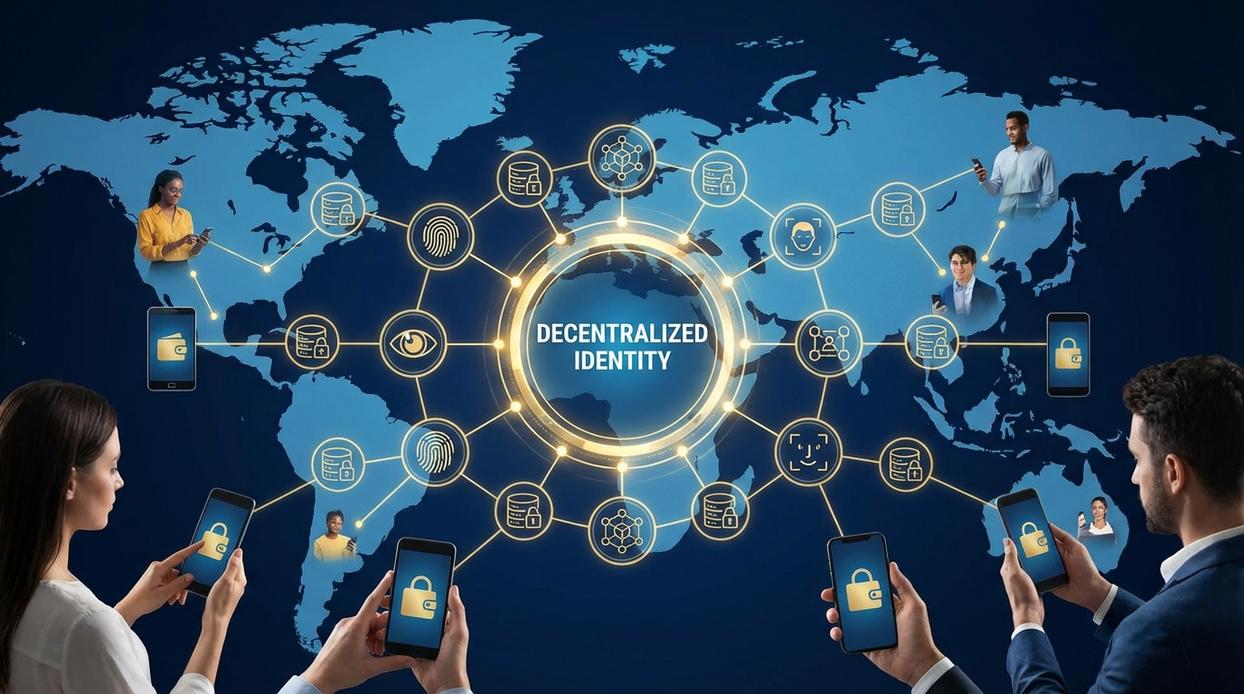
If you’re exploring where blockchain innovation is heading next, you’re likely hearing more about the decentralized identity future—and wondering what it actually means for your digital assets, privacy, and long-term investment strategy.
As data breaches rise and centralized platforms tighten control over user information, decentralized identity is emerging as one of the most transformative applications of blockchain technology. But separating real progress from hype requires a clear understanding of identity protocols, token utility models, and the infrastructure powering them.
In this article, we break down how decentralized identity systems work, which blockchain mechanisms support them, and why they matter for investors and everyday users alike. Drawing on in-depth crypto trend analysis, protocol research, and practical wallet implementation experience, we’ll examine the opportunities, risks, and strategic implications shaping the next phase of Web3.
Whether you’re building, investing, or simply staying informed, this guide will help you navigate what’s ahead with clarity and confidence.
Beyond the password, your identity is scattered across apps, banks, and social platforms.
Decentralized identity flips that model.
A decentralized identifier (DID) is a blockchain-anchored ID you control, secured by public-private key cryptography. Instead of logging in with a password, you sign requests with your private key — like using a hardware wallet to approve a crypto transaction.
Practical steps:
• Create a non-custodial wallet.
• Generate your DID through a protocol.
• Store backup phrases offline.
Critics argue it’s complex, but so was banking once.
The decentralized identity future reduces breaches by minimizing data honeypots (fewer targets, fewer leaks).
What is Self-Sovereign Identity (SSI)?
Self-Sovereign Identity is a model where individuals control their digital identities, rather than handing them to tech giants. In simple terms, you hold the keys to your own data. Back in 2019, when decentralized identity standards began gaining traction, developers started rethinking the “Login with Google” era. Instead, SSI shifts power from centralized databases to user-controlled wallets.
Three pillars make it work: an Issuer (like a university), a Holder (you), and a Verifier (say, an employer). The Issuer creates a Verifiable Credential, a cryptographically signed proof of something about you. You store it and present it when needed, while the Verifier checks its authenticity.
Underneath, Decentralized Identifiers (DIDs) act as unique, blockchain-anchored IDs not owned by any single company. Critics argue centralized logins are easier, and they are—at first. However, as breaches piled up over the past decade, momentum shifted toward a decentralized identity future.
The Mechanics: How Decentralized Identity Works on the Blockchain
At its core, decentralized identity replaces centralized databases with a blockchain-based registry. The blockchain acts as a tamper-resistant ledger that records Decentralized Identifiers (DIDs) and public keys—but not personal data. That distinction matters. Instead of storing your passport scan on-chain (a privacy nightmare), the ledger stores cryptographic proofs that verify authenticity. According to the World Economic Forum, over 1 billion people lack a verifiable digital identity, making secure, privacy-preserving systems a global priority (WEF, 2022).
Digital Signatures and Public Key Cryptography
Control comes from public key cryptography—a system using two mathematically linked keys:
- Public key: Shared openly to verify identity
- Private key: Secret key used to sign approvals
When you approve a data request, your private key creates a digital signature. The network verifies it using your public key. No intermediaries required. (Think of it like signing a check that only your unique handwriting can produce—but mathematically unforgeable.)
Verifiable Credentials in Action
Here’s how it works in practice:
- A university issues a digital diploma as a Verifiable Credential (VC) to a student’s wallet.
- The credential is cryptographically signed by the university.
- The student applies for a job and shares proof of the diploma.
- The employer verifies authenticity instantly—no phone calls, no paperwork.
This model reduces credential fraud, which costs businesses billions annually (FBI Internet Crime Reports).
The Digital Wallet’s New Role
Your crypto wallet becomes more than an asset holder. It’s a secure identity vault—managing keys, credentials, and permissions. That shift underpins the decentralized identity future, where users control access instead of corporations.
Unlocking the Future: Real-World Use Cases for DIDs
Decentralized Identifiers (DIDs) are unique, blockchain-based identifiers that let individuals or entities prove who they are without relying on a central authority. In simple terms, instead of logging in with “Sign in with Google,” you control your own credentials. That shift has practical implications across industries.
Revolutionizing Finance (DeFi & TradFi)
First, consider lending. Today, most DeFi loans require overcollateralization—meaning you must deposit more value than you borrow. With DIDs, borrowers can attach verifiable credentials (cryptographic proof of income, credit behavior, or assets) to their identity. As a result, lenders can assess risk without exposing sensitive data, potentially enabling undercollateralized loans.
Similarly, KYC (Know Your Customer) and AML (Anti-Money Laundering) checks become more efficient. Instead of repeatedly uploading passports to multiple platforms, users could share a verified credential once and selectively grant access. This also supports portable credit histories across borders—something traditional finance still struggles with.
Transforming Healthcare
Next, healthcare. Patients often juggle fragmented records across providers. With DIDs, individuals can grant temporary, verifiable access to specific records—say, lab results for a specialist—without duplicating files. In practice, that reduces administrative friction and data breach risks (a persistent issue in healthcare).
Web3, Metaverse, and Supply Chains
In Web3, DIDs anchor a persistent identity across platforms, linking wallets, achievements, and digital assets. This reduces impersonation fraud and supports true ownership of reputation and NFTs—key pillars of the decentralized identity future.
Finally, supply chains can assign DIDs to products, creating tamper-evident histories of origin and movement. For context on where identity fits in broader market shifts, explore what industry experts predict for the next crypto cycle: https://etrscrypto.net/what-industry-experts-predict-for-the-next-crypto-cycle/.
The road to mainstream adoption sounds exciting, but several hurdles remain.
First is the User Experience (UX) challenge. UX simply means how easy and intuitive a product feels. Today, managing private keys (secret codes that prove ownership) can feel like guarding the One Ring—lose it, and it’s gone. Wallets must hide technical steps behind clean interfaces so everyday users can click, confirm, and move on (without a cryptography degree).
Next comes interoperability—the ability of different blockchains and platforms to work together. Without shared standards, we risk building new identity silos, just on different chains. Think Android vs. iMessage bubbles, but for your credentials.
Governance is another sticking point. If a small group controls protocol updates, neutrality weakens. Decentralized governance spreads decision-making across token holders to protect the decentralized identity future.
Finally, regulation remains unclear. Laws like GDPR require clear data rights, and systems must comply without sacrificing security or usability.
The Inevitable Shift to User-Centric Identity
You now understand the mechanics and promise of decentralized systems. Yet some argue corporate logins are “good enough.” They’re convenient, familiar, and free. But that convenience is like leaving your house keys under the doormat—easy for you, easier for intruders.
Our current model centralizes data in massive silos, making them honey pots for hackers (and history shows breaches are inevitable). By contrast, decentralized identity works like a personal vault you carry yourself. Cryptography becomes the lock; blockchain, the tamper-proof ledger.
This USER-OWNED model powers a decentralized identity future that’s more secure, private, and efficient.
As we explore the promising landscape of decentralized identity solutions, it’s essential to consider how innovative financial strategies like dollar-cost averaging in crypto can play a role in making these technologies more accessible and sustainable – for more details, check out our Dollar-Cost Averaging in Crypto: Does It Work?.
Navigate the Crypto Shift With Confidence
You came here looking for clarity in a fast-moving crypto landscape — and now you have a stronger grasp of crypto trendwatch, blockchain mechanics, token utility models, and smarter digital asset strategies.
The reality is that the market moves quickly, narratives shift overnight, and missing key signals can cost you opportunities. Without a clear understanding of protocol mechanics and wallet security, it’s easy to feel uncertain or exposed.
But informed investors operate differently. They track trends early, understand how tokens actually create value, and position themselves for the decentralized identity future that’s already taking shape.
Now it’s time to act.
Start refining your strategy, reassess your token allocations, and strengthen your wallet setup so you’re not just participating in crypto — you’re positioned to win. Join the thousands of digital asset investors who rely on expert crypto insights to stay ahead of market shifts. Dive deeper today and turn knowledge into your competitive edge.
 There is a specific skill involved in explaining something clearly — one that is completely separate from actually knowing the subject. Havros Tyvonder has both. They has spent years working with etrs token utility models in a hands-on capacity, and an equal amount of time figuring out how to translate that experience into writing that people with different backgrounds can actually absorb and use.
Havros tends to approach complex subjects — ETRS Token Utility Models, Crypto Wallet Setup Tips, Expert Insights being good examples — by starting with what the reader already knows, then building outward from there rather than dropping them in the deep end. It sounds like a small thing. In practice it makes a significant difference in whether someone finishes the article or abandons it halfway through. They is also good at knowing when to stop — a surprisingly underrated skill. Some writers bury useful information under so many caveats and qualifications that the point disappears. Havros knows where the point is and gets there without too many detours.
The practical effect of all this is that people who read Havros's work tend to come away actually capable of doing something with it. Not just vaguely informed — actually capable. For a writer working in etrs token utility models, that is probably the best possible outcome, and it's the standard Havros holds they's own work to.
There is a specific skill involved in explaining something clearly — one that is completely separate from actually knowing the subject. Havros Tyvonder has both. They has spent years working with etrs token utility models in a hands-on capacity, and an equal amount of time figuring out how to translate that experience into writing that people with different backgrounds can actually absorb and use.
Havros tends to approach complex subjects — ETRS Token Utility Models, Crypto Wallet Setup Tips, Expert Insights being good examples — by starting with what the reader already knows, then building outward from there rather than dropping them in the deep end. It sounds like a small thing. In practice it makes a significant difference in whether someone finishes the article or abandons it halfway through. They is also good at knowing when to stop — a surprisingly underrated skill. Some writers bury useful information under so many caveats and qualifications that the point disappears. Havros knows where the point is and gets there without too many detours.
The practical effect of all this is that people who read Havros's work tend to come away actually capable of doing something with it. Not just vaguely informed — actually capable. For a writer working in etrs token utility models, that is probably the best possible outcome, and it's the standard Havros holds they's own work to.