
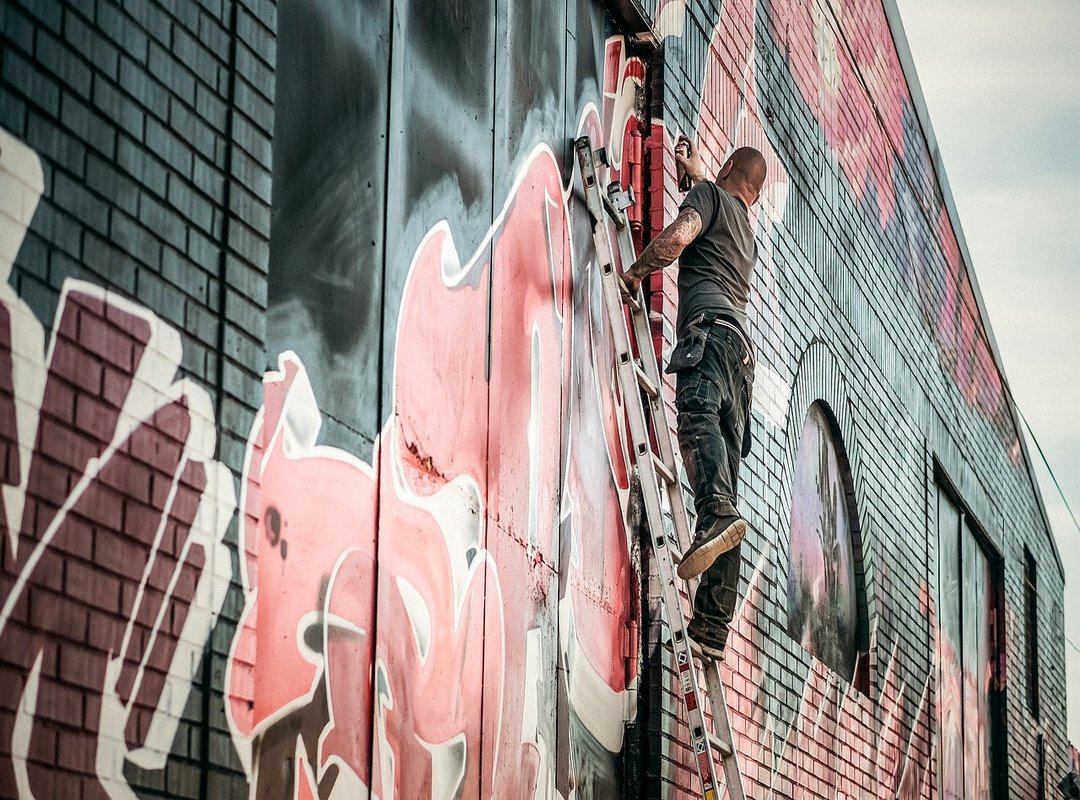
Imagine a vibrant graffiti mural on a brick wall, and suddenly, the letters begin to drip and the characters start to move. You’ve likely seen these mesmerizing moving images online and wondered how they are made. This guide will break down everything you need to know about chidos graffitis animados—the exciting art form where street style meets digital motion.
By the end, you’ll understand the key concepts, know the best tools, and have a step-by-step plan to create your very first piece of animated graffiti.
What Exactly Is Animated Graffiti?
Animated graffiti, often called ‘gif-iti,’ is the art of taking a static graffiti piece and adding digital motion to bring it to life. It’s like giving a mural a shot of espresso.
The first method involves animating a photograph of existing street art. The second is creating a digital graffiti illustration from scratch and then animating it. Both ways, you end up with something that moves and grooves.
You might see this art in viral social media content like Instagram Reels and TikToks. It’s also used in digital art installations and even augmented reality (AR) experiences. Chidos graffitis animados can turn a simple wall into a dynamic, interactive experience.
Common animation styles include making letters morph and bubble, characters blink or dance, or colors pulse to a beat. It’s like your favorite graffiti just got a new set of dance moves.
This art form is a natural, modern evolution of graffiti culture. It allows artists to reach a global audience in a digital-first world. Imagine if Banksy had a Twitter account—now that would be something to follow!
The Best Tools and Apps for Bringing Graffiti to Life
When it comes to bringing graffiti to life, the right tools can make all the difference. Let’s break them down into two groups: beginner-friendly mobile apps and more powerful desktop programs.
Beginner-Friendly Mobile Apps
Procreate is a top choice, especially with its Animation Assist feature. It’s got an intuitive interface and one-click effects that make it easy to start animating your art.
Motionleap (formerly known as Plotaverse) lets you add motion to still images. Perfect for giving your graffiti a dynamic, moving feel without a steep learning curve.
Werble is another great option. It’s designed for quick, simple animations and has a user-friendly design that makes it ideal for beginners.
Professional Desktop Software
For those looking to take their skills to the next level, Adobe After Effects is the go-to for complex motion graphics. It’s powerful and can handle just about anything you throw at it.
Adobe Photoshop also deserves a mention. Its timeline feature allows for frame-by-frame animation, making it a versatile tool for both static and animated graffiti.
Essential Hardware
A drawing tablet is a game-changer. Whether you opt for an iPad with an Apple Pencil or a Wacom tablet, having a precise and responsive tool can elevate your digital art. It gives you the control you need to bring chidos graffitis animados to life.
Free vs, and paid Options
Investing in paid software offers more control and higher quality output. But if you’re just starting out, free tools are a great way to learn the basics without any upfront costs. Etrscrypto
Finding the right balance between ease of use and professional features can help you create stunning, animated graffiti.
Your First Animated Graffiti Project: A Step-by-Step Guide

Starting an animated graffiti project can seem daunting, but it’s easier than you think. Let’s break it down into simple steps.
-
Choose Your Starting Point.
Take a high-quality photo of a cool graffiti piece or draw a simple tag or character digitally. This will be the foundation of your chidos graffitis animados. -
Isolate the Elements for Animation.
Use layers in Procreate or Photoshop to separate the part you want to move (like a single letter or an eye) from the static background. This step is crucial for creating smooth animations. -
Create the Motion with Keyframes.
Keyframing is about setting specific points in time where an element changes. For example, if you want a crown to hover, set keyframes at the start and end of its movement.It’s like telling the software, “Move this here, then move it back.”
-
Refine and Smooth the Animation.
Adjust the timing and ‘easing’ of your keyframes. Easing controls how the animation accelerates and decelerates, making it look more natural.Spend some time tweaking these settings; it makes a big difference.
-
Export and Share Your Work, and choose the right file format. GIFs are great for simple, silent loops, while MP4s are better for longer, more complex animations.
Make sure to test your export on different devices to see how it looks.
By following these steps, you’ll be well on your way to creating your first animated graffiti. It’s all about practice and patience, and good luck!
Inspiring Artists Who Master Animated Graffiti
Studying the work of leading artists is one of the best ways to learn and get new ideas. It’s like having a conversation with someone who’s been where you want to go.
INSA, for instance, is a pioneer in the ‘gif-iti’ space. His large-scale physical animations are a blend of traditional graffiti and digital wizardry. He paints, photographs, and repaints walls to create mesmerizing loops.
Another standout is an artist who uses chidos graffitis animados. Their work is all about blending vibrant colors and fluid motion, creating a visual feast that’s both dynamic and engaging.
Seeing their art in motion can really open your eyes to the possibilities. Check out these artists on Instagram or Behance. You’ll be amazed at what they can do.
Start Creating Your Own Moving Masterpieces
You now understand what animated graffiti is, the tools required, and the fundamental steps to make it. With this knowledge, you’re ready to embark on your creative journey. Chidos graffitis animados are not just for the pros; they’re an accessible skill for anyone with a creative idea and the right digital tools.
This week, challenge yourself to follow the step-by-step guide using a simple design to create your first animation. Animation is the next frontier of personal expression in street art, and you can be part of this dynamic movement.
 Stephenic Uhligsodans has opinions about digital asset investment strategies. Informed ones, backed by real experience — but opinions nonetheless, and they doesn't try to disguise them as neutral observation. They thinks a lot of what gets written about Digital Asset Investment Strategies, Blockchain Mechanics and Protocols, Expert Insights is either too cautious to be useful or too confident to be credible, and they's work tends to sit deliberately in the space between those two failure modes.
Reading Stephenic's pieces, you get the sense of someone who has thought about this stuff seriously and arrived at actual conclusions — not just collected a range of perspectives and declined to pick one. That can be uncomfortable when they lands on something you disagree with. It's also why the writing is worth engaging with. Stephenic isn't interested in telling people what they want to hear. They is interested in telling them what they actually thinks, with enough reasoning behind it that you can push back if you want to. That kind of intellectual honesty is rarer than it should be.
What Stephenic is best at is the moment when a familiar topic reveals something unexpected — when the conventional wisdom turns out to be slightly off, or when a small shift in framing changes everything. They finds those moments consistently, which is why they's work tends to generate real discussion rather than just passive agreement.
Stephenic Uhligsodans has opinions about digital asset investment strategies. Informed ones, backed by real experience — but opinions nonetheless, and they doesn't try to disguise them as neutral observation. They thinks a lot of what gets written about Digital Asset Investment Strategies, Blockchain Mechanics and Protocols, Expert Insights is either too cautious to be useful or too confident to be credible, and they's work tends to sit deliberately in the space between those two failure modes.
Reading Stephenic's pieces, you get the sense of someone who has thought about this stuff seriously and arrived at actual conclusions — not just collected a range of perspectives and declined to pick one. That can be uncomfortable when they lands on something you disagree with. It's also why the writing is worth engaging with. Stephenic isn't interested in telling people what they want to hear. They is interested in telling them what they actually thinks, with enough reasoning behind it that you can push back if you want to. That kind of intellectual honesty is rarer than it should be.
What Stephenic is best at is the moment when a familiar topic reveals something unexpected — when the conventional wisdom turns out to be slightly off, or when a small shift in framing changes everything. They finds those moments consistently, which is why they's work tends to generate real discussion rather than just passive agreement.