Crypto markets move fast—but understanding why they move is what separates speculation from strategy. If you’re searching for clear insights on crypto trendwatch, blockchain mechanics, digital asset investment strategies, ETRS token utility models, or secure wallet setup tips, this guide is built to give you exactly that.
We break down complex blockchain protocols into practical explanations, analyze real-time market behavior, and examine layer 2 adoption trends shaping scalability and transaction efficiency across major networks. Whether you’re evaluating long-term token utility or optimizing your portfolio approach, you’ll find actionable, research-backed insights designed to reduce guesswork.
Our analysis draws on up-to-date market data, technical protocol reviews, and established blockchain research to ensure accuracy and relevance. Instead of hype or recycled headlines, this article delivers focused, evidence-based guidance to help you make smarter decisions in an increasingly competitive digital asset landscape.
The Next Chapter in Blockchain Scalability
For years, we’ve heard about the blockchain trilemma—the idea that decentralization, security, and scalability can’t fully coexist. And honestly? It’s exhausting. High gas fees, slow confirmations, and endless debates about “the future” left many users wondering if scaling was just crypto’s favorite broken promise.
Now, the conversation has shifted from if Layer 2 solutions work to how layer 2 adoption trends are unfolding in real time.
Here’s what’s changing:
- Developers are prioritizing rollups and modular design
- Investors are tracking ecosystem incentives
- Users demand cheaper, faster transactions
This article breaks down the actionable trends shaping today’s L2 landscape. For deeper context, see https://example.com. Understanding them isn’t optional—it’s survival in a rapidly evolving digital asset space.
Rollups Reign Supreme: The ZK vs. Optimistic Divide
If you’ve spent any time tracking Ethereum scaling, you’ve heard the term rollup. A rollup is a Layer 2 (L2) network that processes transactions off the main Ethereum chain, then “rolls up” the data and posts it back to Ethereum for security. Think of it as batching receipts before filing them with headquarters (cleaner, faster, cheaper).
Today, rollups are the dominant L2 design. But not all rollups work the same way.
Optimistic Rollups—like Arbitrum and Optimism—operate on a simple assumption: transactions are valid by default. Instead of proving every transaction is correct upfront, they rely on a fraud-proof system. If someone spots an invalid transaction, they can challenge it during a set window called the challenge period. This keeps computation light, but withdrawals can take days because funds remain locked until that window closes.
ZK-Rollups, such as Polygon zkEVM and zkSync, take a different approach. They use zero-knowledge proofs—cryptographic validity proofs that mathematically confirm transactions are correct before they’re finalized. No waiting game. Faster finality. Stronger guarantees.
Some critics argue ZK systems are overly complex and expensive to build. That’s fair. The cryptography is cutting-edge, and development has historically been slower. But complexity doesn’t mean impractical. In fact, improving tooling and falling proof-generation costs are accelerating adoption.
Key differences at a glance:
- Optimistic: simpler design, delayed withdrawals
- ZK: advanced cryptography, near-instant finality
The broader shift in layer 2 adoption trends points toward ZK solutions. As scalability demands grow, projects increasingly favor ZK-Rollups for efficiency, tighter security, and long-term composability. (It’s less “if” and more “when” at this point.)
The Great Unbundling: How Modular Architectures Are Reshaping L2s
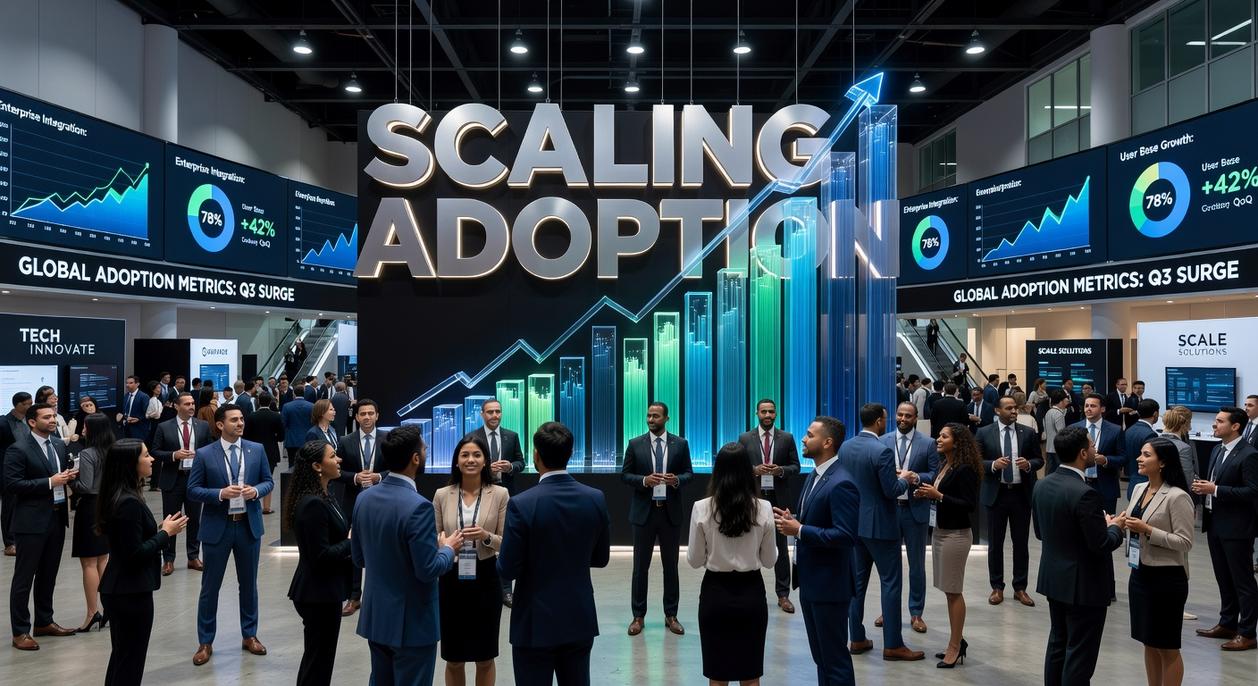
For years, blockchains followed a monolithic model—meaning execution (processing transactions), settlement (finalizing them), and data availability (storing transaction data so it can be verified) all happened on a single layer. Ethereum originally worked this way. The upside? Simplicity. The downside? Bottlenecks. When everyone uses the same highway, traffic is inevitable.
Enter modular architecture. Instead of doing everything in one place, Layer 2s (L2s) now outsource specific functions—especially Data Availability (DA)—to specialized chains like Celestia. In this setup, an L2 focuses purely on execution while Celestia ensures transaction data remains accessible and verifiable. It’s a DIVISION OF LABOR approach (and yes, even blockchains benefit from specialization).
Critics argue this adds complexity and new trust assumptions. Fair. More moving parts can mean more risk. But evidence suggests the tradeoff works: modular rollups have demonstrated significantly lower data costs compared to Ethereum mainnet posting fees, improving scalability and throughput (Celestia documentation; Ethereum rollup cost analyses, 2023–2024).
This design shift aligns with layer 2 adoption trends, where rollups now secure billions in total value locked according to L2Beat.
A direct result? Rollups-as-a-Service (RaaS)—platforms enabling rapid deployment of custom L2s without building infrastructure from scratch. Think Shopify, but for blockchains.
Lower costs. Higher throughput. Greater specialization. That’s the UNBUNDLING thesis in action.
For context on asset expansion within this ecosystem, see the rise of real world asset tokenization explained.
Beyond Transactions: Application-Specific Use Cases Driving Adoption
Speculation used to dominate crypto conversations. But now? Real applications are pulling users on-chain. Have you ever wondered why people are suddenly talking less about tokens and more about what you can do with them?
Trend 1 – On-Chain Gaming
For years, fully on-chain games were a cool idea with terrible user experience. High gas fees and slow confirmations made simple actions expensive (no one wants to pay $20 to swing a virtual sword). Layer 2 networks—blockchains built on top of Layer 1 to increase speed and reduce cost—changed that equation.
Low fees and high throughput make complex in-game actions viable. Digital collectibles, better known as NFTs (non-fungible tokens that represent unique digital assets), can now be minted and traded without friction. Think Fortnite skins, but actually owned by players. WITHOUT affordable scaling, this model simply doesn’t work.
Trend 2 – Perpetual DEXs and Advanced DeFi
Perpetual DEXs are decentralized exchanges offering perpetual futures—contracts that let traders speculate without expiry dates. These platforms demand constant price updates and rapid trade execution. Sound stressful? It is.
High throughput isn’t optional; it’s essential. That’s why much of this activity is migrating off Layer 1. Critics argue this fragments liquidity. Fair point. But would you rather have unified liquidity that’s unusable, or distributed liquidity that actually works?
Trend 3 – Decentralized Social Media (SocialFi)
Now imagine every like, post, or follow recorded on-chain. SocialFi platforms rely entirely on low-cost transactions. If each interaction cost dollars, would you post daily?
This shift highlights broader layer 2 adoption trends: applications—not just transactions—are driving momentum. The question is simple: where will users go when usability finally matches ambition?
The past few years have made one thing clear: rollups dominate the scaling conversation, especially zero-knowledge (ZK) rollups. Rollups bundle transactions off-chain and submit proofs back to a base layer, reducing congestion while inheriting security. At first, I underestimated ZK systems, assuming optimistic rollups would win because they were simpler to ship. That was a mistake. As validity proofs improved and costs dropped, ZK became the technical frontrunner—faster finality, stronger cryptographic guarantees (math doesn’t bluff).
At the same time, architecture shifted toward modularity. Instead of one chain doing everything—execution, settlement, data availability—networks began separating these roles. Think of it like microservices replacing monolithic apps. I initially resisted this model, believing simplicity would attract users. In reality, specialization unlocked flexibility and experimentation.
Application-specific chains added another pull. Gaming, DeFi, and social protocols began launching tailored environments optimized for their needs. The big lesson? There won’t be a single L2 winner. The future is a multi-chain mesh of interconnected, purpose-built layers.
However, this creates friction. Without seamless bridges and shared liquidity, users face fragmented experiences. Interoperability is no longer optional; it’s infrastructure. Current layer 2 adoption trends show that projects solving cross-chain movement will define the next phase.
Ultimately, as interoperability improves, this interconnected ecosystem will onboard the next wave of users—quietly, efficiently, and at scale.
Stay Ahead of the Next Crypto Wave
You came here to better understand where crypto markets are heading, how blockchain mechanics are evolving, and what it means for your digital asset strategy. Now you have a clearer view of the forces driving innovation—from protocol upgrades to layer 2 adoption trends that are reshaping scalability, speed, and transaction costs.
The reality is this: the crypto space moves fast, and falling behind on key developments can cost you opportunities. Whether it’s optimizing wallet security, evaluating token utility models, or identifying high-potential digital assets, staying informed is no longer optional—it’s essential.
Your next move is simple. Keep tracking emerging trends, refine your strategy with data-driven insights, and apply what you’ve learned before the market shifts again. Join thousands of informed investors who rely on expert crypto analysis to stay ahead. Explore the latest reports, deepen your research, and take action today—because the biggest gains often go to those who are prepared first.